Heather’s Bookshelf: Author Interview with B. Robert Conklin
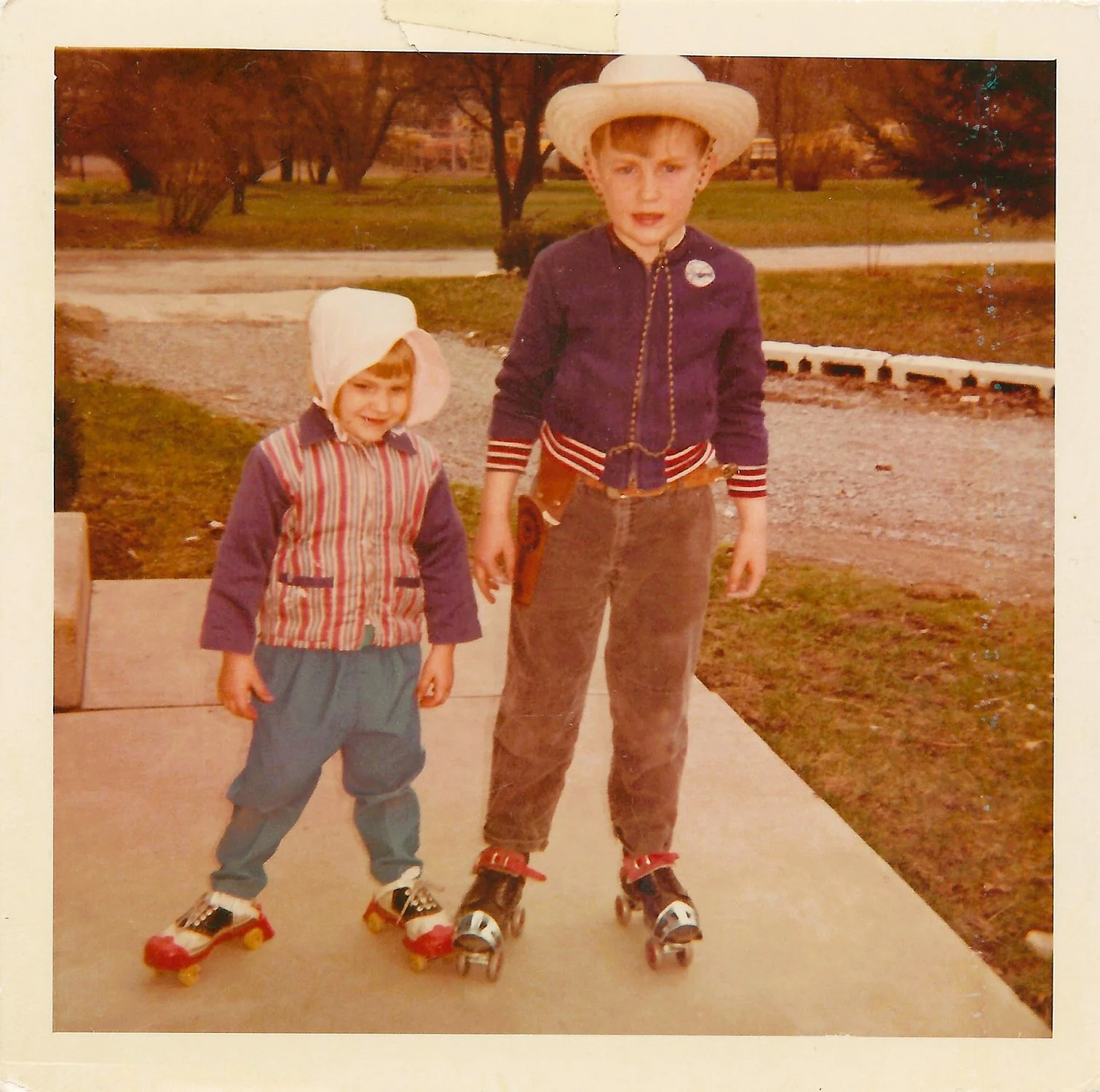
Book Title: Ursula Major
Released: 07/31/25
Genre: Contemporary Literary Fiction
Interview by Heather L. Barksdale
What inspired you to write “Ursula Major”?
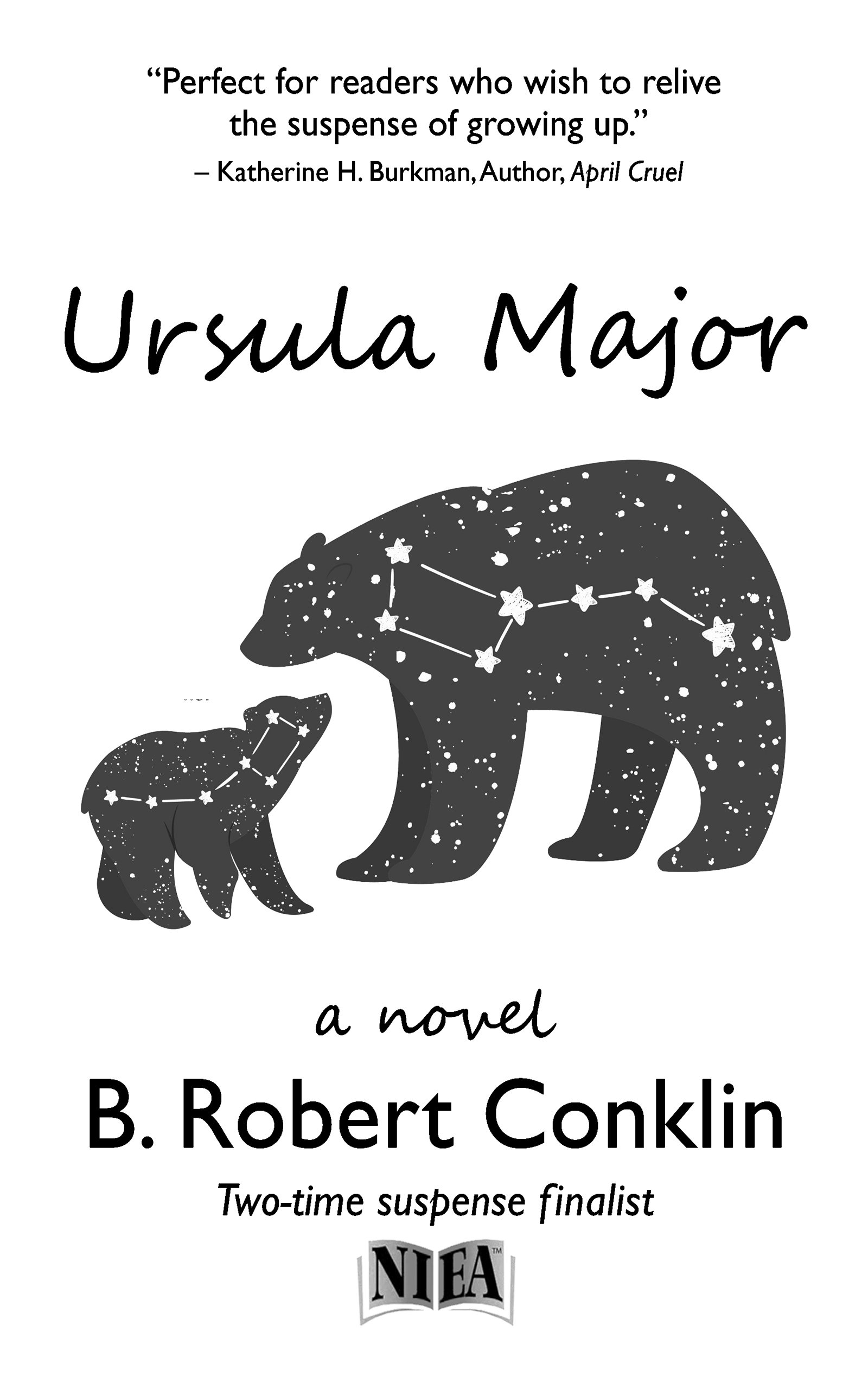
Conklin: The novel grew out of my reminiscences about growing up with two younger sisters in the 1960s and 70s—yes, all the way back then. Unfortunately, the novel only had room for one sister, so the other one had to go. Some of the incidents in the novel are based on childhood experiences, like jumping down the cellar steps in a contest that ended with a sprained ankle—not the compound fracture portrayed in the book. My sisters and I really did play “ghost in the graveyard” in an actual cemetery that bordered our parents’ property.
Just like the siblings in the novel, we were the poor kids at the top of a dead-end street lined with much wealthier neighbors. I would visit friends on my clunker of a bicycle with coaster brakes, envious of their shiny new bikes with high handlebars and banana seats. As I wrote the basic draft of the kids’ episodes, I started thinking about how the stories we tell are embellished by memory, so I decided to describe events long past through an adult narrator who is trying to differentiate between what actually happened and what is just wishful thinking or distorted imagination.
How did you come up with the names of your main characters?
Conklin: Ursula is a pun on Ursa Major, the constellation of the Big Bear that contains the Big Dipper which points toward the North Star, a fixed point in the sky you can always rely on for direction. Thus, Ursula, nicknamed Ursie, is her parents’ Little Bear Cub. Although she’s a minor—the novel starts with her birth and ends when she’s around 10 years old—she plays a major role in the novel, outgrowing the confines of being her big brother’s sidekick. So I liked the irony of a character beginning in a minor supporting role becoming a major player in her own right.
The name of the main character and narrator, Jeremy Hilary Jones, just has a nice lilt to it, the way it rolls off the tongue. As the adult Jeremy himself remembers, he liked it when his father called him by his full name even though it was usually followed by a reprimand. In one episode, he boasts to a bully who thinks his middle name is sissified that he was named after the sherpa that guided Sir Edmund Hillary to the summit of Mt. Everest, except his middle name has one “L” not two. He confesses he would much rather have been named after the sherpa, Tenzing Norgay. Just think of it: Jeremy Tenzing Jones. Or “Zing” for short. In a way, this tiny bit of wistfulness underscores Jeremy’s chronic dissatisfaction with his lot in life.
Is there anything that you want readers to know about you, your writing process or your book?
Conklin: My writing process generally goes through the following stages:
Yellow ledger stage: Here I play around with ideas, scribble, doodle, underline, highlight, cross out, start over, plot different “What ifs,” write fast and furiously, slow down to a crawl, write little notes of encouragement, express complete frustration, howl, laugh, cry … and finally give up when I have trouble rereading my handwriting.
Word-processing stage: Now I begin typing up my ledger notes in Word (my kids keep encouraging me to switch to Google docs, but I have a financial agreement with Microsoft). Typically, I’ll keep resaving the file as a new version, to which I’ll keep adding and subtracting, revising and rearranging, until 20 or 30 versions later, I have something that “feels” about right.
Show it to my spouse stage: My spouse is my harshest critic. She once asked me to do a complete rewrite of a novel that was 10 days away from publication.
Send it to literary agents stage: I’ve sent drafts of novels to as many as 75 agents, of whom four were no longer in business, three were frauds, and one was deceased. If I start getting requests for partials or fulls, which sometimes happens, I know I’m on the right track. The best rejections are when you get a personalized email providing a line or two that you can decipher as to what the agent really thought and how you might go about fixing the issue: “I like your style, but your novel just isn’t marketable,” “Your opening was great but the rest of it failed to keep my attention,” etc.
Decide on self-publication phase: This occurs after my 75th rejection, when I’ll shrug my shoulders and say, “Eh, what do agents know anyway?”
Marketing stage: Ugh! Which is why I’m thankful for opportunities such as this :-)
If “Ursula Major” were adapted into a movie, who would you like to see cast to play your lead characters?
Conklin: I’m going to go with three cast members in Stranger Things, since it’s coming out on Thanksgiving
Jeremy : Will Byers (Noah Schnapp) – Will is the least adventurous of the foursome, the most well-mannered and polite, so it’s not surprising he is the one the Demogorgon picks on in Season 1 as most susceptible to bullying. In Ursula Major, young Jeremy is also picked on as a “mama’s boy” but nothing to the extent Will endures. Nevertheless, like Will, he exhibits a backbone that gets him through some tough situations.
Ursula: Max Mayfield (Sadie Sink) – Max arrives in Hawkins in Season 2 as a bit of a belligerent hellraiser who butts heads with her rival, namely Eleven. She’s a little older than Ursie, but ends up having the kind of grit, determination, and loyalty that are aspects of Ursie’s character as well. Plus they share a snarky sense of humor.
Maddie (the Mom): Joyce Byers (Winona Ryder) – Throughout the series to date, Joyce cares deeply about her kids and would go to any lengths to protect them from harm, efforts which may at times seem a little “out there.” Jeremy and Ursie’s mom can seem a bit wacky as well, but she has a good heart and is resilient in her efforts to keep her kids safe in the wake of her husband abandoning the family.
When you encounter writer’s block, what do you do to break yourself out of it?
Conklin: Funny you should mention this. I haven’t been experiencing writer’s block of late so much as sheer laziness—or maybe call it “ennui.” Whenever I pick up a pen or sit at a keyboard, I usually don’t have much trouble banging out a few words. It’s just a matter of disciplining myself to keep going. I have about three or four manuscripts that are still in the yellow ledger stage of development, and I keep promising myself I am going to spend an hour a day on them in rotation. So I’m suffering more a lack of motivation than actual writer’s block. I already know the cure: getting back into the habit of writing daily, as much or as little in the time allotted, without worrying about my word count.
Are there any tips that you would like to share with other aspiring authors?
Conklin: As an author, I’m still aspiring, although I’m not always sure what I’m aspiring to. I’m the kind of writer who either writes a flurry of words until I find myself in a corner from which I back all the way out or writes 10 words and deletes 9 as not quite expressing what I have in my head. So I try to keep in mind the advice given by an artist friend who coached me on my fledgling efforts at drawing when I was younger. He told me not to erase my mistakes but to incorporate them into the evolving artwork, as constant correction curbs creativity. This is something I try to apply to my writing, especially of early drafts: letting the words flow freely without second-guessing myself about their value (i.e., whether they’re worth keeping). As Lao Tzu phrases it in the Tao Te Ching, “A good artist lets his (or her) intuition lead him (or her) wherever it wants.”
What is your favorite book, genre, and/or author?
Conklin: I enjoy fantasy and sci-fi the most, so it’s probably no surprise I’m rereading The Witcher series for the third time! Otherwise, I enjoy genre-bending fiction—anything offbeat, marginal, or whimsical. As an English major, I had a fondness for the Absurdists— Samuel Beckett, Harold Pinter, Donald Barthleme, Franz Kafka— names I can’t quite believe are from the early to mid-previous century. When browsing, I’m sure I’m like many readers in finding new titles through serendipity, the more obscure the better. Here are some recent books I’ve come across: A Very Long Engagement, The Reader on the 6.27, Land of Big Numbers, and Two Hawks from Earth. Ever hear of them? Me either. But they turned out being pretty good. All except Two Hawks, which so far is a DNF, by an author I actually have heard of. Sorry, Philip José Farmer.
What are you working on next?
Conklin: I’m working on trying to become more motivated! So as to continue working on a couple of manuscripts that are struggling out of the yellow ledger phase into the word-processing phase. One is set in the 1980s about a former roommate who needs a place to stay and who may or may not be plotting to steal the narrator’s priceless work of art. Another takes place in the 1930s and is again about a brother and sister trying to hang onto the family mountain farm in West Virginia after their father’s untimely death. In a way, I guess these are both historical novels—also standalones. I don’t have the motivation to attempt a series yet.
Interested in checking out the book for yourself?
Find it for purchase here
Want to learn more about Ursula Marjory and B. Robert Conklin?
Instagram: bob_reads_and_writes
X: rbconklin1
Author website: www.brobertconklin.wordpress.com
Interested in submitting your book for review? Visit my review page for guidelines and submission requirements.
review