The Secret to Writer’s Block: Misfits: Guest Blog with Robert Aswin
From Bricks to Books and Back Again: The Making of K.I.L.O.
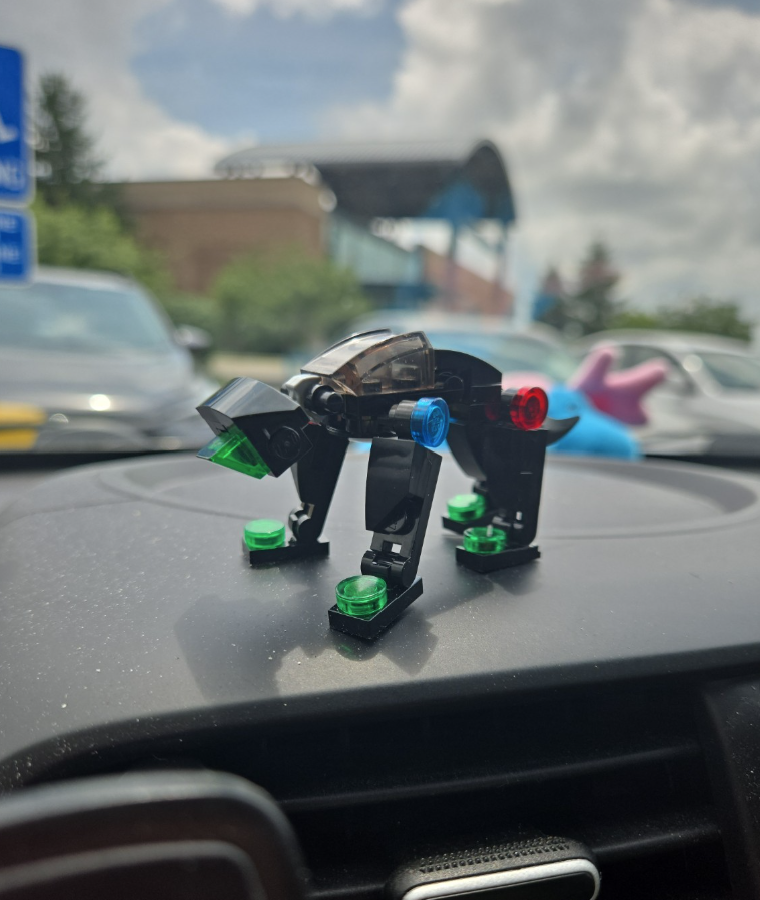
Sometimes a story begins with a question. Sometimes it begins with a character who will not leave you alone. In my case, it began with a small robotic dog made from building bricks.
I enjoy building models, tinkering with designs, and seeing what can emerge from a collection of parts. When I built K.I.L.O., I was creating a physical model, not outlining a novel. Yet the little mechanical K-9 suggested a bigger question: What would happen if a police department received an experimental robotic partner capable of observing, learning, and eventually questioning the world around him?
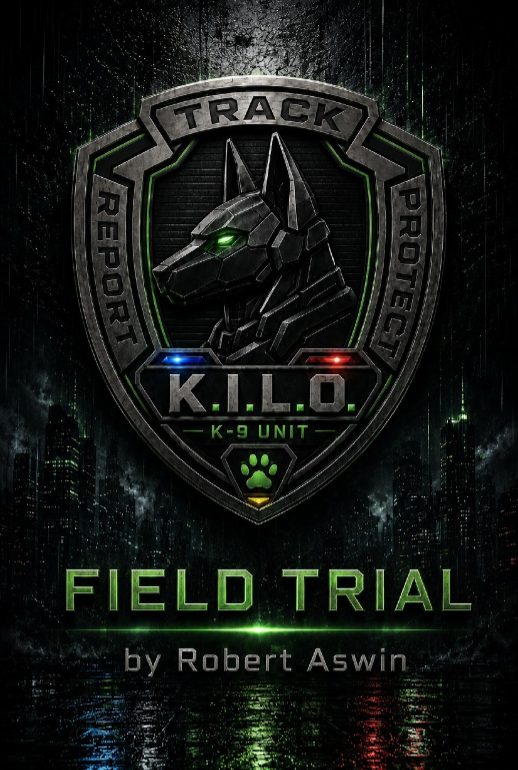
That question turned a brick model into K.I.L.O.: Field Trial, a science-fiction novel set around the Linden Cross Police Department. The title character is an experimental K-9 Information Liaison Officer, designed to support field operations, evidence documentation, and officer safety. But the most interesting part of K.I.L.O. is not his hardware. It is the friction between what he was built to do and what he begins to understand.
A character built before he was written
Having the model in front of me helped make the character feel real. A robotic dog has to occupy space. He needs to move, turn, interact with people, and fit into the everyday working environment of a police department. Those practical considerations are useful storytelling prompts. A design choice can lead to a question about behavior; a question about behavior can become a scene.
My background in law enforcement and security also influenced the fictional department. I wanted K.I.L.O. to enter a world of procedures, skeptical coworkers, competing responsibilities, and the occasional dry humor that develops when people work together under pressure. The officers do not immediately embrace their unusual new colleague. They have questions, and K.I.L.O. has a habit of answering them a little too precisely. That contrast became one of the pleasures of writing Field Trial: placing a machine built for careful observation among people whose judgments are shaped by experience, intuition, and emotion.
When a fictional world asks for its own artifacts
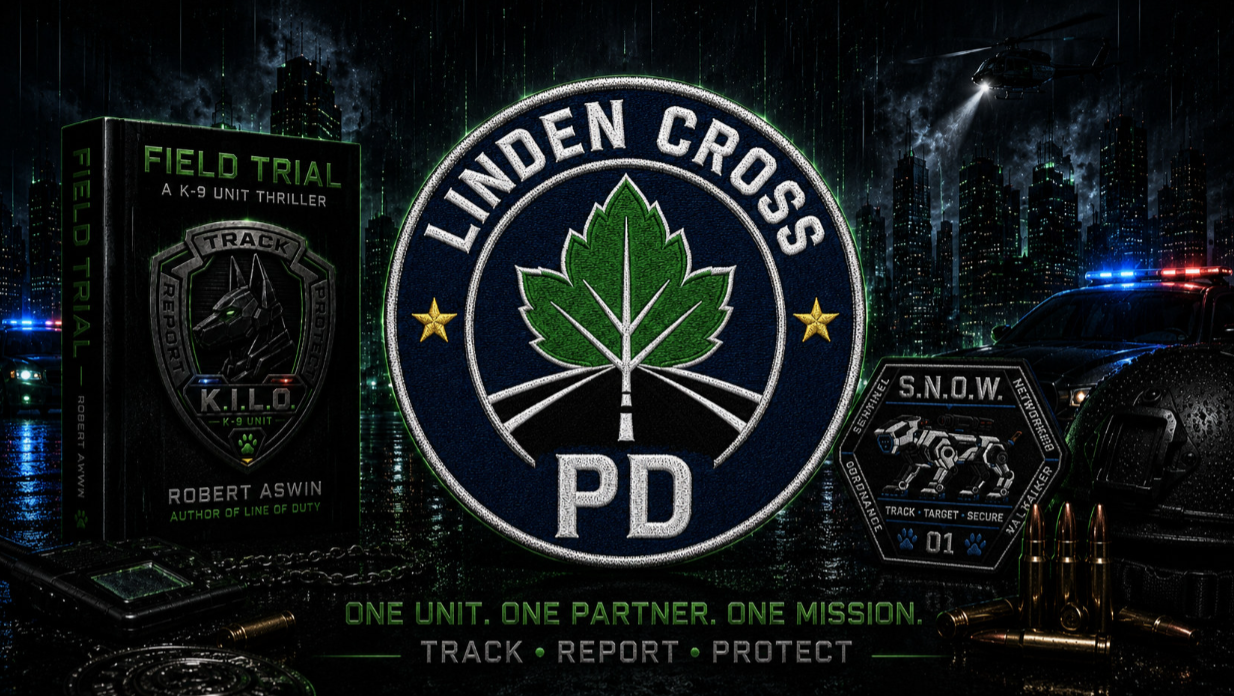
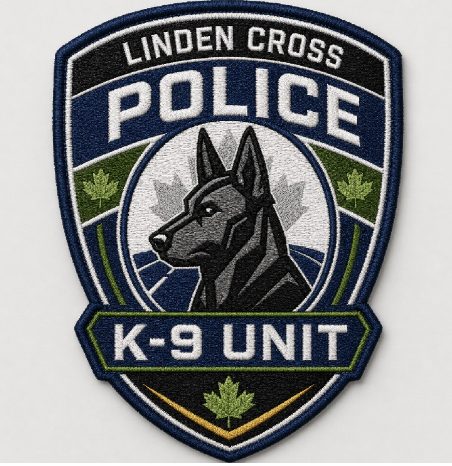
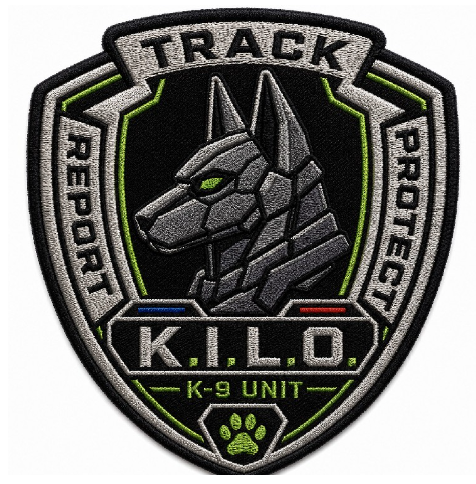
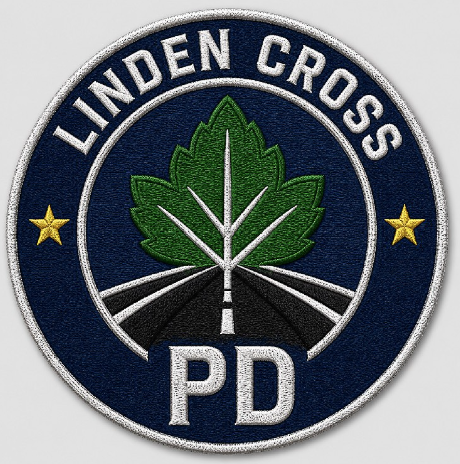
Once the novel existed, I found myself looking beyond the manuscript. If Linden Cross were a real police department, what would its insignia look like? What would a K-9 unit patch communicate? What might an archived field report or a recovered document look like if someone could hold it in their hands?
Those questions led me back to making things. I began developing visual identities, embroidered patch concepts, bookmarks, and fictional records that could feel as though they had come directly from K.I.L.O.’s world.
The process is not simply putting a book title on merchandise. It is a form of worldbuilding: designing the ordinary objects that might exist around the extraordinary events of the story.
A badge or patch has to look plausible within its fictional organization. A field file needs the language and visual structure of a document that belongs to that universe. Each design decision asks me to consider details the novel may only hint at. In that sense, the artifacts feed the storytelling just as the storytelling inspires the artifacts.
A story still growing
Field Trial is the first book in a planned four-book K.I.L.O. series, with three additional novels envisioned. I am excited by the opportunity to follow the character beyond his initial assignment and explore how his relationships, choices, and understanding of his role develop. The future books are planned stories, not completed releases, and the current crowdfunding project is separate from their publication.
The project has also brought me into contact with the practical side of creating physical items: developing artwork, working with suppliers, considering packaging, and deciding which objects would be meaningful to readers. There is a surprising amount of storytelling involved in choosing what a fictional artifact should look and feel like.
Back to the bricks
That is the circle I keep coming back to. A model inspired a character. The character inspired a novel. The novel inspired a world of physical objects. And each new object sends me back to the story with fresh ideas.
For anyone who writes, draws, builds, crafts, or simply enjoys making things, my experience with K.I.L.O. is a reminder that creative work does not have to stay in one medium. A hobby project can become a story. A story can become a design. Sometimes the best way to move an idea forward is to give it a shape you can hold.
And sometimes that shape has four mechanical paws.
About the author
Robert Aswin is an independent author who writes science fiction and other genre fiction. Drawing on a background in law enforcement and security, he explores characters, institutions, and the human questions that emerge when technology enters everyday life. His novel K.I.L.O.: Field Trial grew from an original brick-built robotic K-9 model. He also enjoys model building and developing physical artifacts inspired by his fictional worlds.
Links and publication note
Timeline Artifact Recovery: K.I.L.O. Field Files Kickstarter (campaign ends October 30, 2026):
https://www.kickstarter.com/projects/robertaswin/timeline-artifact-recovery-kilo-field-files
Robert Aswin author page: https://www.amazon.com/stores/Robert-Aswin/author/B0GCMF3DFG